
14 Mukhi Rudraksha - Benefits, Significance, Mantra and Who Should Wear It
14
Mukhi Rudraksha - Significance, Benefits, Mantra, and How to Wear It
What
Is 14 Mukhi Rudraksha?
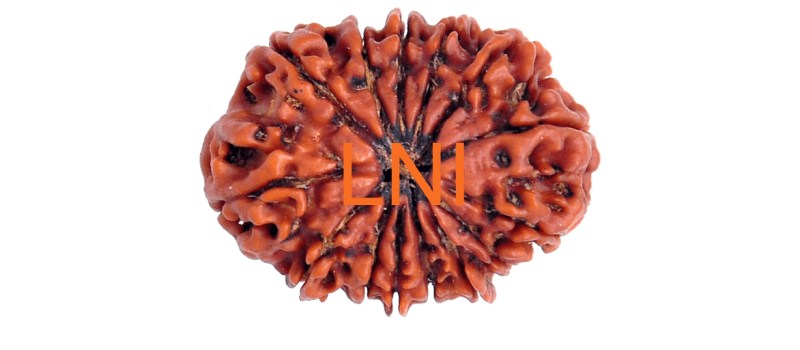
14 Mukhi Rudraksha is a powerful and
rare Rudraksha bead with fourteen naturally formed lines (mukhis) running from
top to bottom. It is directly connected to Lord Shiva and is considered a
manifestation of Srikanth, one of Shiva's forms. Vedic astrology associates it
with both Mars and Saturn. It is traditionally worn for courage, clarity,
decision-making, protection from Saturn's adverse transits, and overall
well-being.
Fourteen
distinct grooves, called mukhis, run naturally from the top to the bottom of
this bead. Each line is formed naturally - not carved or painted. The number
and clarity of these lines are what define and distinguish it from other
Rudraksha beads.
Which
God Is Associated with 14 Mukhi Rudraksha?
14 Mukhi Rudraksha is primarily
associated with Lord Shiva, specifically in his form as Srikanth. It is also
closely connected to Lord Hanuman, who is himself an avatar of Rudra (Lord
Shiva). Wearing this Rudraksha is traditionally said to carry the blessings of
both Lord Shiva and Lord Hanuman simultaneously.
Lord
Shiva and the 14 Mukhi
According
to the Shrimad Devi Bhagwat Purana, the 14 Mukhi Rudraksha is compared to
Rudra's own eyes. The Shiva Purana states that fourteen mukhi should be worn on
the head with great devotion, and it compensates for all one's sins. The Padma
Purana adds that when this bead is worn on the forehead or the arm at all
times, it transforms into the Shakti Pind of Lord Shiva himself, and the gods
always show reverence to the person who wears it.
In
the Rudraksha Jabala Upanishad, it is said to have originated from the eyes of
Lord Shiva, and possesses the ability to cure all diseases while bringing
health and wealth. According to the Mantra Maharanava, the fourteen-faced
Rudraksha is the manifestation of God Srikanth himself, and it liberates the
wearer as well as their friends and relatives from previous generations.
Lord
Hanuman's Connection
Lord
Hanuman is a Rudra Avatar - a direct manifestation of Lord Shiva. This is why
14 Mukhi Rudraksha also carries Hanuman's blessings. The Hanuman Chalisa
describes Hanuman's power beautifully:
Sankat
se Hanuman chudavai, Man Karam Vachan dhyan jo lavai
Lord
Hanuman is Chiranjeevi (immortal) and, whenever a devotee in distress remembers
him with sincerity of mind, speech, and action, Hanuman himself comes to their
rescue. The Hanuman Chalisa further states:
Durgaam
kaj jagat ke jete, Sugam anugraha tumhre tete
Under
the shelter of Lord Hanuman's grace, no task remains too difficult. This is why
14 Mukhi Rudraksha instills courage, determination, and the capacity to deal
with difficult situations.
Bhoot
pisach Nikat nahin aavai, Mahavir jab naam sunavai
Wearing
this bead and chanting Hanuman's names is traditionally believed to provide
protection from negative energies. Lord Hanuman's life teaches us never to let
power corrupt us, to stay humble, and to maintain a compassionate heart -
wisdom that the 14 Mukhi is said to bring to its wearer.
14
Mukhi Rudraksha Benefits
The 14 Mukhi Rudraksha is
traditionally associated with courage, confidence, improved decision-making,
protection from Saturn's Sade Sati and Dhaiya, reduction in Mangal Dosha
effects, better concentration, willpower, professional growth, and spiritual progress.
According to ancient texts, it heals diseases, dispels fear, and brings health
and wealth.
Spiritual
and Scriptural Benefits
●
According
to the Shrimad Devi Bhagwat Purana, it heals all diseases, dispels fear, and
fulfills desires.
●
The
Rudraksha Jabala Upanishad attributes to it the ability to restore health and
bring wealth.
●
According
to the Mantra Maharanava, wearing 14 Mukhi liberates the wearer (Moksha) and
their family across generations.
●
The
Padma Purana states that the person wearing it receives the respect of the gods
themselves.
●
It is
said to carry the cumulative spiritual merit of fasting on every Chaturdashi
(the fourteenth lunar day), which is Lord Shiva's favourite Tithi.
●
As
the Skanda Purana (Kedara Khanda, Chapter 33) states: the fourteenth day of the
Krishna Paksha (dark lunar fortnight) is especially sacred to Lord Shambhu
(Shiva), and the Shivaratri Tithi wipes out all sins. The wearer of 14 Mukhi
Rudraksha receives the benefit of observing this fast.
●
The
bead elicits compassion and consideration toward all living beings.
Astrological
Benefits - Mars and Saturn
In
Vedic astrology, 14 Mukhi Rudraksha is ruled by Mars and Saturn. Vedic
astrology considers Mars a fiery planet associated with the fire element;
Saturn is associated with coal and oil and is a cold planet. When these two
planetary energies interact negatively in a horoscope, they can cause physical
injuries, stomach ailments, and angry temperament. This Rudraksha is
traditionally used to reduce such effects.
●
Provides
protection during Sade Sati (Saturn's seven-and-a-half year transit) and Dhaiya
(Saturn's two-and-a-half year transit through the fourth or eighth house from
the natal moon).
●
Helps
those with Mangal Dosha - Mars placed in the 1st, 4th, 7th, 8th, or 12th house
in the horoscope.
●
Reduces
malefic effects when Mars and Saturn are conjunct, aspecting each other, or
both influencing sensitive houses.
●
Assists
people going through Saturn's transit delays in marriage or career.
Note:
If Saturn and Mars together affect the 7th house in the horoscope, an
experienced astrologer may recommend 14 Mukhi Gauri Shankar rather than a
regular 14 Mukhi bead.
Psychological
and Practical Benefits
●
Builds
confidence and courage - particularly useful for people who fear public
speaking or have an inferiority complex.
●
Improves
decision-making by developing emotional maturity and balanced judgment. People
who make impulsive decisions, or who struggle with indecision due to weak
Saturn or Mars, can benefit.
●
Increases
willpower and the mind's capacity to handle stress and difficult situations.
●
Improves
concentration - beneficial for students.
●
Professional
and financial benefits: people working in speculative trading, agriculture, oil
and gas, mining, politics, astrology, healing, mechanical or civil engineering,
surgery, human resources, and import-export trade are traditionally advised to
use this bead for clearer assessment of situations and people.
●
Professionals
can expect sustained growth, better earnings, and reduced financial distress,
according to tradition.
●
Reduces
excessive anger - especially helpful when Mars and Saturn sit in a fire sign.
●
Beneficial
for people dealing with grief - particularly parents who have lost a child, or
widows.
14
Mukhi Rudraksha Significance - What the Ancient Texts Say
The
significance of 14 Mukhi Rudraksha runs through multiple Puranas and
Upanishads. Each text highlights a slightly different dimension of its power:
|
Scripture |
Key
Teaching |
|
Shrimad
Devi Bhagwat Purana |
Comparable
to Rudra's eyes; heals all diseases, dispels fear, satisfies desires |
|
Padma
Purana |
Transforms
into Shiva's Shakti Pind when worn on forehead or arm; gods respect the
wearer |
|
Shiva
Purana |
Should
be worn on the head with devotion; compensates for all sins |
|
Rudraksha
Jabala Upanishad |
Originated
from Lord Shiva's eyes; cures diseases, brings health and wealth |
|
Mantra
Maharanava |
Manifestation
of Srikanth; liberates wearer and their lineage (Moksha) |
|
Skanda
Purana (Kedara Khanda 33) |
Chaturdashi
is beloved of Shiva; wearing 14 Mukhi gives merit equal to fasting on this
tithi |
The
Sanskrit verse from the Skanda Purana (Kedara Khanda, Chapter 33) reads:
चतुर्द्दशी तथा शंभोः प्रिया नास्त्यत्र संशयः॥
निशीथसंयुता या तु कृष्णपक्षे चतुर्द्दशी॥
उपोष्या सा तिथिः श्रेष्ठा शिवसायुज्यकारिणी॥ ३३.८२ ॥
शिवरात्रितिथिः ख्याता सर्वपापप्रणाशिनी॥
अत्रैवोदाहरंतीममितिहासं पुरातनम्॥ ३३.८३
Chaturddashi
tatha Shambhoh priya naastyatra sanshayah | Nishita-sanyuta ya tu
Krishna-pakshe Chaturddashi | Uposhya sa tithih shreshttha Shiva-sayujya-karini
|| 33.82 ||
Shiva-ratri-tithih
khyata sarva-papa-pranashini || 33.83
Translation:
The fourteenth day is a favourite of Shambhu (Lord Shiva). There is no doubt
about this. The Chaturdashi Tithi of the dark fortnight, which extends until
the middle of the night, is the most excellent of tithis and is conducive to
the attainment of Sayujya (identity) with Lord Shiva. This Tithi of Shivaratri
is famous as the destroyer of all sins.
Every
month, the Chaturdashi Tithi of Krishna Paksha is known as Monthly Shivaratri.
Since fourteen Mukhi Rudraksha is directly related to the number fourteen and
Lord Shiva, the wearer is traditionally believed to receive the spiritual merit
of observing this fast.
Which
Planet Rules 14 Mukhi Rudraksha?
14 Mukhi Rudraksha is ruled by two
planets: Mars (Mangal) and Saturn (Shani). Mars is a fiery planet representing
energy, courage, and the ability to execute plans. Saturn represents maturity,
discipline, and long-term consequences. This makes 14 Mukhi Rudraksha
particularly relevant for people affected by Sade Sati, Dhaiya, Mangal Dosha,
or any difficult Mars-Saturn combination in their horoscope.
In
Vedic astrology, when Mars and Saturn interact negatively, they can produce
physical harm, accidents, stomach ailments, and emotional outbursts. Immature
decisions and poor long-term planning are also associated with weak or
afflicted Mars and Saturn. 14 Mukhi Rudraksha is traditionally used to pacify
these effects.
The
story of Hanuman and Saturn (Shani) is also relevant here: According to
tradition, Ravana had imprisoned Saturn in a dark cell in Lanka. When Lord
Hanuman arrived in Lanka to carry Shri Ram's message to Mata Sita, he heard
Saturn's distress and freed him. Saturn, grateful for his rescue, promised Lord
Hanuman not to trouble his devotees. This is why people suffering under
Saturn's difficult transits are advised to seek Lord Hanuman's blessings - and
why 14 Mukhi Rudraksha, which carries Hanuman's blessing, is specifically
recommended during Sade Sati and Dhaiya.
14
Mukhi Rudraksha for Which Rashi?
The ancient texts do not restrict 14
Mukhi Rudraksha to any specific Rashi (moon sign). Rather, it is recommended
based on planetary conditions in the horoscope and specific life situations.
However, people undergoing Saturn's Sade Sati or Dhaiya - regardless of Rashi -
are traditionally advised to wear it. Those with Mangal Dosha in any Rashi may
also benefit.
Because
Saturn transits through every Rashi over 29.5 years, all twelve Rashis will
eventually experience Sade Sati or Dhaiya at some point. At that time, 14 Mukhi
Rudraksha can be relevant regardless of the wearer's natal moon sign.
For
personalised guidance on whether this Rudraksha suits your specific horoscope,
it is always wise to consult an experienced Vedic astrologer who can assess
your birth chart directly.
Who
Should Wear 14 Mukhi Rudraksha?
Anyone seeking courage, better
decision-making, Saturn's grace, or relief from Mars-Saturn related challenges
may wear 14 Mukhi Rudraksha. There is no strict restriction based on gender or
religion. People facing Sade Sati, Dhaiya, or Mangal Dosha are the most
commonly advised wearers, but students, professionals, athletes, and those with
fear or anger issues can also benefit.
Specific
Groups Who May Benefit
●
People
currently in Sade Sati (Saturn transiting the sign before, the sign of, or the
sign after the natal moon) or in Dhaiya (Saturn in the 4th or 8th from the
natal moon).
●
People
with Mangal Dosha: Mars placed in the 1st, 4th, 7th, 8th, or 12th house of the
horoscope.
●
People
with an inferiority complex or lack of self-confidence.
●
Those
who fear public speaking.
●
People
who frequently experience accidents or physical injuries (both Mars and Saturn
are significators of physical harm).
●
Professional
athletes, choreographers, and defense personnel who need sustained high energy.
●
Lazy
individuals who lack direction or motivation in life.
●
Students
struggling with poor concentration.
●
Those
dealing with grief, particularly widows and parents who have lost a child.
●
People
facing financial hardship.
●
Those
with excessive anger, especially if Mars and Saturn are placed in a fire sign
in the horoscope.
●
People
experiencing delays in marriage: Saturn in the 1st, 5th, 7th, or 10th house can
aspect the 7th house of marriage and cause delay. Saturn conjunct the 7th lord,
or aspecting the 7th house ruler, also creates marital delay. In such cases, 14
Mukhi is traditionally recommended.
●
Professionals
in speculative trading, agriculture, oil and gas, mining, politics, astrology,
healing, engineering, surgery, human resources, or import-export trade who need
sharper situational judgment.
How
to Wear 14 Mukhi Rudraksha
14 Mukhi Rudraksha can be worn on the
forehead, the arm, or as a pendant or mala resting near the heart. It is
traditionally capped in gold or silver thread. The bead should be energised
with the appropriate mantra before wearing and should ideally be put on during
an auspicious time, preferably on a Monday or on Shivaratri, after a bath.
Where
to Wear It
●
On
the forehead: Some texts specifically recommend this position, as this bead is
associated with the Ajna Chakra (the sixth chakra, or medulla plexus). Wearing
it here is said to improve visualisation, foresight, and the ability to make
logical decisions.
●
On
the arm: Recommended by the Padma Purana.
●
As a
pendant or mala: Wearing the bead on a thread or chain so that it rests near
the heart region is also traditional.
Mantra
for 14 Mukhi Rudraksha
The
following mantras are prescribed in the traditional texts for 14 Mukhi
Rudraksha:
●
Om
Namah (Shiva Purana)
●
Om
Namo Namah (Mantra Maharanava and Padma Purana)
●
Om
Nraam (Padma Purana)
●
Om
Dum Maam Namah (Skanda Purana)
●
Om
Namah Shivaya (general Shiva mantra, widely used)
●
Rudra
Gayatri Mantra
●
Mahamritunjaya
Mantra
For
daily practice, chanting Om Namah Shivaya is the simplest and most universally
accepted approach. Any of the above mantras may be chanted 108 times while
holding the bead.
Care
Instructions
●
Chant
Om Namah Shivaya daily.
●
Visit
a Shivalinga regularly, especially on Shivaratri. Pour water, milk, or
panchamrit and seek Lord Shiva's blessings.
●
Apply
a small amount of mustard oil mixed with sandalwood oil on every Chaturdashi
tithi.
●
Remove
the Rudraksha before visiting a newborn baby or attending a funeral.
●
It is
generally advised not to wear Rudraksha during physical intimacy.
●
Women
are traditionally advised not to wear Rudraksha during their menstrual cycle.
●
Rudraksha
beads or mala should not be shared, exchanged, or transferred to another person
once worn.
●
Avoid
displaying your Rudraksha openly to everyone. Keeping it discreet is
traditionally considered important for maximising its benefits.
Nepal
vs Indonesian 14 Mukhi Rudraksha
14 Mukhi Rudraksha is sourced from
two main origins: Nepal and Indonesia (primarily Java). Nepal beads are
significantly larger and more expensive. Indonesian beads are smaller in size
and more affordable. Both are genuine Rudraksha; the difference lies in size,
appearance, and price rather than any scripturally established difference in
spiritual value.
|
Feature |
Nepal
14 Mukhi |
Indonesian
14 Mukhi |
|
Size |
Larger |
Smaller
(typically much smaller than Nepal beads) |
|
Price |
Higher |
Lower |
|
Availability |
Less
common; true Nepal beads are rarer |
More
readily available |
|
Mukhi
lines |
Clearly
defined, deeper lines typical of larger bead |
Well-defined
for the size |
|
Comparison
note |
Compare
Nepal beads only with other Nepal beads when evaluating size |
Compare
Indonesian beads only with other Indonesian beads |
When
comparing prices or sizes, always compare within the same origin class. A large
Nepal bead should not be compared against an Indonesian bead for size, as the
difference in origin means they are essentially different products even though
both are genuine 14 Mukhi Rudraksha.
Beads
are also available in special natural forms: Gauri Shankar (two beads naturally
joined), Garbh Gauri (two beads joined with one much smaller), Trijuti (three
beads naturally joined), and Sawar (two beads joined, one with one mukhi and
one with thirteen). These rarer forms command significantly higher prices.
Types
of 14 Mukhi Rudraksha Available
Both
Nepal and Indonesian origin 14 Mukhi Rudraksha are available in the following
forms:
●
Regular
beads (the standard form)
●
Sawar:
two beads naturally joined - one has one mukhi, the other has thirteen mukhi.
Rare and highly valued.
●
Gauri
Shankar: two beads naturally joined. Represents Shiva and Shakti together.
●
Regular
bead with Ganesh: a bead with one or more natural trunk-like protrusions.
●
Gauri
Shankar Ganesh: a Gauri Shankar bead that also has a natural trunk formation.
●
Garbh
Gauri: two beads naturally joined, one much smaller than the other.
●
Trijuti:
three beads naturally joined together. This is the rarest of all types and
commands the highest price.
Original
14 Mukhi Rudraksha - Price Factors and Authenticity
The price of original 14 Mukhi
Rudraksha depends on origin (Nepal or Indonesian), size, type (regular, Gauri
Shankar, Trijuti, etc.), and natural clarity of the mukhi lines. Nepal beads
cost significantly more than Indonesian ones of similar type due to their
larger size and relative rarity. Always buy from a reputable source and insist
on an independent laboratory certificate.
Here
is what drives the price variation:
●
Origin:
Nepal beads are larger and cost more than Indonesian beads of the same type.
●
Size:
Larger, heavier beads cost more within the same origin class.
●
Type:
A Trijuti (three naturally joined beads) costs the most due to its extreme
rarity. Gauri Shankar Ganesh costs more than regular Gauri Shankar. Sawar
versions are also rare and priced accordingly.
●
Authenticity:
Certified beads from reputable sources with verifiable lab certificates cost
more than uncertified beads - but this is a cost worth paying.
What
to check before buying:
●
Insist
on a certificate from an independent laboratory. It is even better if you can
verify the certificate online through the laboratory's own website.
●
Be
cautious of unusually cheap beads. An authentic 14 Mukhi, especially from
Nepal, is genuinely rare. A price that seems too good compared to market
standards warrants careful scrutiny.
●
Ask
specifically whether you are buying a Nepal or Indonesian bead, and a regular
or special type (Gauri Shankar, Trijuti, etc.).
●
Choosing
the correct type for your intended purpose - regular, Gauri Shankar, Garbh
Gauri, etc. - is important. Consult an experienced astrologer when in doubt.
The
demand for authentic 14 Mukhi Rudraksha consistently exceeds supply, which
makes verification especially important.
Does
14 Mukhi Rudraksha Have Side Effects?
14 Mukhi Rudraksha has no known
medical side effects. It is a natural seed. From a traditional and spiritual
standpoint, wearing the wrong type for your horoscope situation, or wearing it
without proper energisation, is sometimes cited as a reason for not receiving
expected benefits. Always consult an experienced astrologer before choosing the
specific type.
From
a traditional perspective:
●
Wearing
the wrong type (for example, regular 14 Mukhi when Gauri Shankar 14 Mukhi was
indicated) may simply mean the bead is less suited to your specific situation.
●
Rudraksha
tradition advises following basic care instructions (removing during certain
occasions, not sharing the bead, applying oil periodically) to preserve the
bead's effectiveness.
●
Do
not expect physical side effects from wearing a natural Rudraksha bead.
Spiritual or astrological traditions do not describe adverse physical effects
from genuine, properly worn beads.
●
As
with all spiritual practices, results described in traditional texts are
traditional and astrological in nature - they are not a substitute for medical
advice.
D.
FAQ Section
Frequently
Asked Questions About 14 Mukhi Rudraksha
1.
What are the benefits of 14 Mukhi Rudraksha?
14
Mukhi Rudraksha traditionally provides courage, confidence, improved
decision-making and concentration, protection during Saturn's Sade Sati and
Dhaiya, relief from Mangal Dosha effects, reduced anger, and better financial
outcomes. Ancient texts also associate it with healing, spiritual liberation
(Moksha), and the grace of both Lord Shiva and Lord Hanuman. These are
traditional, scriptural, and astrological beliefs rather than medical claims.
Which God is associated with 14 Mukhi Rudraksha?
14
Mukhi Rudraksha is associated with Lord Shiva in his form as Srikanth. It is
also connected to Lord Hanuman, who is a Rudra Avatar (direct avatar of Shiva).
Wearing this bead is said to bring the blessings of both Lord Shiva and Lord
Hanuman.
Which planet rules 14 Mukhi Rudraksha?
14
Mukhi Rudraksha is ruled by two planets: Mars (Mangal) and Saturn (Shani). This
makes it particularly beneficial for people experiencing difficult Mars-Saturn
combinations in their horoscope or undergoing Saturn's difficult transits.
Which Rashi can wear 14 Mukhi Rudraksha?
The
ancient texts do not restrict this Rudraksha to any specific Rashi. It is
recommended based on the planetary situation in your horoscope - particularly
Sade Sati, Dhaiya, Mangal Dosha, or challenging Mars-Saturn interactions.
People of any Rashi facing these astrological situations may benefit. Consult a
Vedic astrologer for specific guidance.
Who can wear 14 Mukhi Rudraksha?
People
undergoing Sade Sati or Dhaiya, those with Mangal Dosha, people who lack
confidence or fear public speaking, students with poor concentration,
professionals in high-pressure fields, athletes, those with anger issues, and
people experiencing financial difficulties or grief are traditionally advised
to wear it. There is no gender or religious restriction.
How should 14 Mukhi Rudraksha be worn?
It
can be worn on the forehead (recommended by some texts as it relates to the
Ajna Chakra), on the arm (as per the Padma Purana), or as a pendant or mala
resting near the heart. It should be energised with the mantra before first
wearing. Ideally, put it on after a bath on a Monday or on Shivaratri. Chant Om
Namah Shivaya daily after wearing it.
What is the mantra for 14 Mukhi Rudraksha?
Mantras
prescribed for 14 Mukhi Rudraksha include: Om Namah (Shiva Purana), Om Namo
Namah (Mantra Maharanava, Padma Purana), Om Nraam (Padma Purana), Om Dum Maam
Namah (Skanda Purana), Om Namah Shivaya, the Rudra Gayatri Mantra, and the
Mahamritunjaya Mantra. Chanting Om Namah Shivaya 108 times daily is widely
practised.
What is the price of original 14 Mukhi Rudraksha?
The
price varies significantly depending on origin (Nepal or Indonesian), size,
type (regular, Gauri Shankar, Trijuti, etc.), and certification. Nepal beads
cost substantially more than Indonesian beads of the same type. A Trijuti is
the rarest and most expensive. Rather than specifying fixed prices (which
change with availability), always request an itemised breakdown from your
seller and verify the lab certificate independently.
How can I identify or buy an original 14 Mukhi Rudraksha?
Buy
only from a reputable seller who provides an independent laboratory
certificate. Check that the certificate can be verified online through the
laboratory's own website. Ensure the bead has fourteen naturally formed,
clearly distinguishable lines running from top to bottom. Be cautious of prices
that seem unusually low for the type and origin being offered.
What is the difference between Nepal and Indonesian 14 Mukhi Rudraksha?
Nepal
beads are significantly larger and more expensive. Indonesian beads are smaller
and more affordable. Both are genuine. Size should always be compared within
the same origin class - a Nepal bead should only be compared with another Nepal
bead, and an Indonesian bead with another Indonesian bead. The ancient texts do
not establish one origin as spiritually superior to the other.
Does 14 Mukhi Rudraksha have any side effects?
There
are no known medical side effects. It is a natural seed. From a traditional
standpoint, wearing the incorrect type for your horoscope, or not following
care instructions, may reduce the bead's effectiveness. This Rudraksha is not a
substitute for medical treatment.
Can 14 Mukhi Rudraksha be worn during Sade Sati?
Yes.
It is one of the most commonly recommended Rudraksha beads specifically for
people undergoing Sade Sati or Dhaiya of Saturn. The connection between Lord
Hanuman and Saturn (described in the traditional story of Hanuman freeing
Saturn from Ravana's prison) is the core reason for this recommendation.
Is 14 Mukhi Rudraksha suitable for Mangal Dosha?
Yes.
14 Mukhi Rudraksha is associated with Mars and is traditionally recommended for
those with Mangal Dosha (Mars in the 1st, 4th, 7th, 8th, or 12th house). For
cases where Mars and Saturn together affect the 7th house, an astrologer may
recommend 14 Mukhi Gauri Shankar instead.
Can 14 Mukhi Rudraksha be worn as a bracelet or pendant?
Yes. The bead may be worn as a pendant on a thread or chain near the heart, on the arm as prescribed by the Padma Purana, or on the forehead. Dedicated 14 Mukhi Rudraksha bracelet options are also available. For bracelet and mala combinations including multiple mukhi beads, see the relevant product pages on this website.