
7 Mukhi Rudraksha: Benefits, Price & Buying Guide
7 Mukhi Rudraksha: Benefits, Price, Original Identification,
How to Wear & Complete Buying Guide
Introduction
If you have been
searching for a Rudraksha that is deeply connected to wealth, stability, and
inner confidence, the 7 Mukhi Rudraksha keeps coming up, and for good reason.
This sacred bead,
with seven natural lines running from its top to its base, holds a special
place in Hindu spiritual traditions. It is traditionally associated with
Goddess Mahalakshmi, the deity of abundance, and with Saptarishi, the seven
divine sages. Thousands of people search for it every month, whether they are
looking to understand its benefits, find an original certified piece, or simply
learn how to wear it correctly.
In this guide, you
will find everything you need: what the 7 Mukhi Rudraksha actually is, the
spiritual benefits that practitioners attribute to it, how to identify an
original bead from a fake, how to wear it properly, rules to follow after
wearing, a comparison of Nepali versus Indonesian varieties, price factors, and
a practical buying checklist so you do not end up with an overpriced or fake
bead.
Whether you are a
first-time buyer or someone who already wears Rudraksha and wants to deepen
your understanding, this article is written for you.
What is 7 Mukhi Rudraksha?
Rudraksha beads come
from the fruit of the Elaeocarpus ganitrus tree, a large evergreen that grows
primarily in the Himalayan foothills of Nepal, and in parts of Indonesia,
India, and Sri Lanka. The word "Rudraksha" comes from Sanskrit:
"Rudra" (another name for Lord Shiva) and "Aksha" (eye or
tear). Tradition holds that these beads are the tears of Lord Shiva, shed out
of compassion for humanity.
What makes each
Rudraksha unique is the number of natural grooves or lines, called
"mukhis," running along its surface from one end to the other. These
lines form naturally as the seed develops inside the fruit. A 7 Mukhi Rudraksha
has exactly seven such lines, creating seven distinct segments on the surface
of the bead.
It is important to
understand that this is not a man-made marking. The mukhi lines are a natural
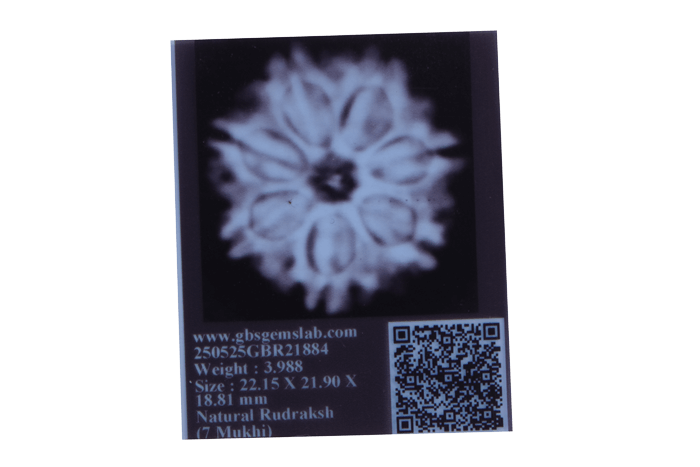
part of the seed's growth. Each segment has its own internal compartment, which
can be verified through X-ray testing, and this is one reason laboratory certification
is so important when buying.
Spiritually, each
type of Rudraksha is believed to carry a specific energy and to be ruled by a
particular deity and planet. The 7 Mukhi is traditionally associated with
Goddess Mahalakshmi, with Saptarishi (seven cosmic sages), and with the planet
Saturn. This combination is why it is so frequently recommended for people
seeking financial growth, stability, and inner strength.
Meaning of the Seven Faces (Mukhis)
In Vedic and Shaivite
traditions, the number seven carries deep symbolic weight. Think of the seven
colours of light, the seven notes of music (saptaswar), the seven chakras of
the human energy system, the seven seas, and the seven days of the week. Seven
represents wholeness, balance, and completeness.
The seven mukhis on
this Rudraksha are traditionally said to represent:
● Saptarishi - the
seven divine sages, considered the mind-born sons of Brahma and guardians of
cosmic knowledge
● Saptamatrika - the
seven divine mothers in the Shakta tradition
● Sapta Dhanya - the
seven sacred grains associated with fertility and abundance
● Seven Seas -
symbolising vastness and limitless potential
● Seven Chakras - the
energy centres in the human subtle body
Many practitioners
believe that wearing a 7 Mukhi Rudraksha activates and balances these
principles within the wearer's life, helping to remove obstacles related to
Saturn and inviting the grace of Mahalakshmi.
Spiritual Note: According to the Shiva Purana and Padma
Purana, the 7 Mukhi Rudraksha is said to be blessed by Ananta, the cosmic
serpent, and by the seven sages. It is traditionally recommended to remove
afflictions caused by the planet Saturn (Shani dosha).
7 Mukhi Rudraksha Benefits
The benefits
attributed to the 7 Mukhi Rudraksha come from centuries of tradition,
documented in ancient texts such as the Shiva Purana, Rudraksha Jabala
Upanishad, and Srimad Devi Bhagavatam. Here is what many practitioners and
spiritual traditions believe about this bead:
For Wealth and Financial Stability
The 7 Mukhi is
perhaps most widely known for its association with financial well-being.
Traditionally believed to carry the blessings of Goddess Mahalakshmi, many
wearers report an improvement in their financial circumstances over time. This
can be understood through the lens of belief and intention: wearing the bead
serves as a constant reminder of one's financial goals and connects the wearer
to Mahalakshmi's energy through regular mantra and meditation practice.
For Business Growth
Business owners and
entrepreneurs frequently choose the 7 Mukhi Rudraksha. According to spiritual
traditions, it is said to help remove obstacles in business ventures, attract
new opportunities, and support steady growth. Many traders in India and Nepal keep
a 7 Mukhi Rudraksha in their place of business or cash drawer as a symbol of
Mahalakshmi's presence.
For Career Confidence
Professionals in
competitive fields often report that wearing the 7 Mukhi helps them feel more
grounded and confident in their decisions. This may be connected to its
association with Saturn, the planet of discipline, patience, and long-term
effort. Many practitioners believe it strengthens one's ability to persevere
through challenges.
For Emotional Balance
Saturn governs karma
and the lessons life teaches us through hardship. Wearing a 7 Mukhi Rudraksha
is traditionally believed to help the wearer accept these lessons with
equanimity, reducing anxiety and emotional reactivity. Many meditation
practitioners use it to develop steadiness of mind.
For Meditation and Spiritual Growth
The 7 Mukhi is a
favourite among those who meditate regularly. When held during meditation or
worn as a bracelet or mala, it is believed to deepen concentration and help the
practitioner access quieter states of awareness. The mantra associated with it,
"Om Hum Namah," is traditionally chanted for spiritual purification
and growth.
For Students and Working Women
Students preparing
for competitive exams often wear this bead to support focus, persistence, and
mental clarity. Working women who juggle professional and personal
responsibilities often report that it helps them feel more centred and less
overwhelmed. These benefits, while rooted in tradition, are generally
understood by practitioners as arising from the combination of intention,
mantra, and the bead's subtle energetic properties.
Important Disclaimer: The benefits described above are based on
traditional spiritual beliefs and practitioner experiences. They are not
medical, financial, or legal claims. This article does not guarantee any
specific outcome. Always consult qualified professionals for medical,
financial, or legal advice.
Ready to experience
the blessings of Mahalakshmi? Shop Certified 7 Mukhi Rudraksha Now
Scientific Perspective
It is only fair to
present the scientific side of this conversation honestly, and that means
acknowledging that rigorous, peer-reviewed scientific evidence for the specific
spiritual claims made about Rudraksha beads is very limited.
What science does
support is this: regular meditation practice, which is often part of wearing
Rudraksha as a spiritual discipline, has well-documented effects on stress
reduction, emotional regulation, and mental clarity. Research published in
journals has consistently shown that mindfulness and mantra-based meditation
can reduce anxiety, improve focus, and support overall well-being.
Some researchers have
studied the bioelectrical properties of Rudraksha beads found that Rudraksha
beads have electromagnetic and diamagnetic properties that may influence the
human nervous system. However, this research has not been extensively
replicated, and it would be premature to make strong claims based on it.
The most honest way
to understand the 7 Mukhi Rudraksha is this: its benefits, as described in
tradition, arise through the combination of belief, intention, mantra practice,
and the discipline of wearing a sacred object with reverence. For many millions
of people across centuries, this combination has been genuinely transformative.
Science is still catching up to understanding how intention, ritual, and belief
affect the human nervous system.
Scientific Note: No large-scale controlled studies currently
validate the specific spiritual, financial, or health claims associated with 7
Mukhi Rudraksha. The benefits described in this article are traditional
beliefs. Wear it as a spiritual practice, not as a substitute for professional
advice.
7 Mukhi Rudraksha and Goddess Mahalakshmi
Among the many
associations of the 7 Mukhi Rudraksha, its connection to Goddess Mahalakshmi is
the most prominent and the most widely cited in traditional texts.
Mahalakshmi is one of
the principal goddesses in the Hindu tradition. She is the consort of Lord
Vishnu and represents the force of beauty, abundance, good fortune, and
spiritual wealth. She is typically depicted with four arms, holding a lotus in
two hands, with gold coins flowing from another, and her fourth hand raised in
the gesture of blessing (abhaya mudra).
According to the
Rudraksha Jabala Upanishad and other Puranic texts, the 7 Mukhi Rudraksha is
said to be imbued with Mahalakshmi's grace. Wearing it with devotion and
regularly chanting her name or the Rudraksha mantra is traditionally believed
to invite her blessings into one's life, home, and work.
Many practitioners
set up a small altar and offer the 7 Mukhi Rudraksha to Mahalakshmi during
Friday puja (Friday being her sacred day), before wearing it. This ritual of
offering and receiving back the bead is believed to deepen the connection
between the wearer and the goddess's energy.
It is worth noting
that the association with Mahalakshmi does not mean the bead is exclusively for
those who seek material wealth. In the Hindu understanding, Lakshmi represents
all eight forms of prosperity: material wealth, intellectual wealth, health,
courage, victory, knowledge, progeny, and spiritual wisdom. The 7 Mukhi
Rudraksha is thus seen as a bead that supports the whole person.
Who Should Wear 7 Mukhi Rudraksha?
While anyone with
faith and reverence can wear a 7 Mukhi Rudraksha, certain groups of people are
particularly recommended to do so in traditional guidance:
● Business owners and
entrepreneurs seeking stability and growth
● Professionals who are
starting a new job or navigating career transitions
● Students preparing
for competitive exams, especially those requiring sustained focus
● Working women who
want energetic support for managing multiple responsibilities
● Homemakers who wish
to invite abundance and harmony into the household
● Meditation
practitioners looking to deepen their practice and develop equanimity
● Those with a strong
Saturn influence in their birth chart (Shani dosha or Sade Sati)
● People going through
periods of financial difficulty or business setbacks
● Spiritual seekers
interested in working with Mahalakshmi energy
In traditional Vedic
astrology, the 7 Mukhi is especially recommended for people with Saturn as
their ruling planet (Capricorn and Aquarius ascendants) or those going through
Saturn periods (Shani Mahadasha or Sade Sati). However, it is generally considered
a gentle and accessible bead that does not require a specific astrological
configuration to be worn with benefit.
Tip: If you are unsure
whether the 7 Mukhi Rudraksha is the right choice for your specific
astrological situation, consult a qualified Jyotish (Vedic astrology)
practitioner before purchasing.
How to Wear 7 Mukhi Rudraksha
Best Day to Wear
Monday or Saturday
are traditionally recommended for wearing a Rudraksha for the first time.
Monday is sacred to Lord Shiva, and Saturday is the day of Saturn, both of
which are connected to the 7 Mukhi. Some traditions also suggest wearing it
during a shukla paksha (waxing moon fortnight) for added auspiciousness.
Best Time
Early morning,
preferably between 6:00 AM and 8:00 AM (Brahma muhurta or just after), is
considered the ideal time to put on a Rudraksha for the first time. This is
when the mind is fresh and the environment is still and receptive.
Purification Before Wearing
● Soak the bead
overnight in pure water or raw milk.
● In the morning, rinse
it gently with clean water.
● Pat dry with a soft,
clean cloth.
● Apply a small drop of
sandalwood oil to the bead.
Energizing (Prana Pratishtha)
Before wearing, sit
facing east. Light a ghee lamp or incense. Hold the bead in your right palm and
chant the mantra 108 times:
"Om Hum
Namah"
You can also chant
the Mahamrityunjaya Mantra or "Om Namah Shivaya" as alternatives if
you have a personal practice centred around Lord Shiva. Offer the bead to your
ishta devata (chosen deity) if you have one, then receive it back as prasad.
Ways to Wear
● As a pendant: Thread
on a red or black silk thread or silver chain and wear touching your skin near
the heart.
● As a bracelet: Wear
on the right wrist. A bracelet typically contains 12 beads, often alternating
with gold or silver colour spacers.
● As a mala: A full
mala has 108 beads plus a meru (the large central bead at the top). Use for
japa meditation.
Suggested Mantra
"Om Hum
Namah" is the Beej mantra specifically associated with the 7 Mukhi
Rudraksha. For Mahalakshmi, "Om Shreem Mahalakshmiyei Namaha" can be
chanted alongside for her specific blessings.
Rules to Follow After Wearing
Do's
● Wear the bead daily
without removing it unnecessarily.
● Chant the associated
mantra every morning, ideally 108 times.
● Treat the bead with
reverence, as a sacred object, not a fashion accessory.
● Oil the bead
occasionally with a drop of sandalwood or sesame oil to maintain its natural
sheen.
● Offer prayers to your
deity on the relevant days (Monday and Saturday).
Don'ts
● Avoid wearing the
bead to funerals, cremation grounds, or during periods of ritual impurity.
● Do not share your
Rudraksha with others, as it is considered a personal sacred object.
● Avoid exposing it to
harsh chemicals, soaps, or swimming pool water.
● Do not keep it
carelessly on the floor or in a bathroom.
● Avoid wearing it
during sexual intercourse, according to traditional guidelines.
Cleaning and Storage
● Clean the bead every
week or two by gently brushing it with a soft toothbrush dipped in clean water.
● Apply a tiny drop of
oil after cleaning to preserve the natural lines.
● When not wearing,
store it in a clean cloth pouch or wooden box.
● Keep it in safe place
when removing it for sleep.
How to Identify an Original 7 Mukhi Rudraksha
The market for
Rudraksha beads is unfortunately full of fakes, which range from beads with
artificially carved lines to plastic replicas and seeds from other plants.
Knowing how to identify an original 7 Mukhi Rudraksha is one of the most
important things you can do before spending money.
Natural Mukhi Lines
On a genuine 7 Mukhi
Rudraksha, the seven lines run naturally from the top (where the stalk
attaches) to the bottom (the tip), dividing the bead into seven distinct
sections. These lines are not uniform or perfectly symmetrical; they have a
slightly irregular, organic quality. Machine-carved or acid-etched fake beads
often have lines that look too perfect or too deep.
Surface Texture
An original Rudraksha
has a naturally rough, textured surface with irregular bumps and crevices. The
bumps are a natural part of the seed's structure. Beads that look too smooth or
that have an artificially polished appearance should be examined closely.
Natural Hole
Genuine Rudraksha
beads are drilled by craftsmen to create a threading hole. The hole should be
straight, uniform in diameter, and free from extra filler material. Some fakes
have off-centre holes or show signs of additional material inserted to disguise
tampering.
Water Test (Limited Reliability)
A common traditional
test says that genuine Rudraksha sinks in water, while fakes float. However,
this test is not reliable because wood density varies and some fake beads are
also dense enough to sink. Do not rely on this test alone.
Laboratory Certification and X-Ray Testing
The most reliable way
to verify a 7 Mukhi Rudraksha is through laboratory testing. A proper X-ray of
the bead reveals its internal compartment structure. A genuine 7 Mukhi has
exactly seven internal chambers, corresponding to the seven external mukhi lines.
No fake bead can replicate this internal structure.
Look for beads that
come with a certificate from a recognized gemological laboratory or Rudraksha
testing centre. Reputable sellers will provide:
● An X-ray image
showing internal compartments
● A written certificate
specifying the number of mukhis, origin, and quality grade
● A unique bead ID that
you can cross-verify with the lab
Common Fake Beads to Watch For
● Bhadraksha beads
(seeds of another plant) carved to look like Rudraksha
● Plastic or resin
replicas
● Rudraksha beads with
acid-etched extra lines to increase the mukhi count
● Filled or glued beads
where parts of the seed have been modified
Buyer's Identification Checklist
● Are the seven mukhi
lines natural, organic, and slightly irregular?
● Does the surface have
natural bumps and texture, not a polished look?
● Is the hole clean and
straight?
● Does the bead come
with an X-ray certificate showing seven internal chambers?
● Is the certificate
from a recognised laboratory?
● Can you see
high-resolution photos from multiple angles?
● Does the seller offer
a video verification or live inspection option?
Why take a risk? At Laxmi Narayan International, every 7 Mukhi Rudraksha is lab-tested, certified, and shipped with care. Order Yours Today
Nepali vs Indonesian 7 Mukhi Rudraksha: A Comparison
Two main origins
dominate the 7 Mukhi Rudraksha market: Nepal and Indonesia. Both are genuine,
both carry spiritual value, but they differ in significant ways that affect
price, appearance, and collector preference.
|
Feature |
Nepali
7 Mukhi Rudraksha |
Indonesian
7 Mukhi Rudraksha |
|
Size |
Larger
(typically 18-25 mm) |
Smaller
(typically 8-14 mm) |
|
Shape |
Rounder,
larger, more pronounced segments |
More
uniform, slightly oblong |
|
Surface |
Deeper,
more pronounced mukhi lines |
Finer,
more delicate lines |
|
Weight |
Heavier
due to larger size |
Lighter |
|
Colour |
Light
brown to dark brown, natural |
Brown,
sometimes with reddish tones |
|
Price |
Generally
higher |
More
affordable |
|
Availability |
Rarer,
harder to source |
More
widely available |
|
Energetic
Quality |
Often
considered more potent by traditional practitioners |
Considered
equally spiritually valid |
|
Certification |
Available
|
Available
|
|
Collector
Preference |
Highly
preferred by serious collectors |
Popular
for daily wear and malas |
|
Best
For |
Pendants,
special spiritual purposes |
Bracelets,
malas, daily devotional use |
The choice between
Nepali and Indonesian ultimately comes down to your purpose and budget. For a
pendant or a focal piece for serious spiritual practice, many practitioners
prefer a larger Nepali bead. For a bracelet or a mala intended for daily wear,
Indonesian beads are practical, affordable, and widely certified.
7 Mukhi Rudraksha Price Guide
The price of a 7
Mukhi Rudraksha varies considerably based on several factors. Rather than
giving fixed prices (which change with market conditions, currency
fluctuations, and seller pricing), it is more useful to understand what drives
the price so you can evaluate any offer you see.
Factors That Affect Price
● Origin: Nepali beads
command a premium over Indonesian beads due to their size, rarity, and
traditional prestige.
● Size: Larger beads
are rarer and more expensive. Even within Nepali beads, a 22 mm bead costs
significantly more than a 17 mm one.
● Shape: A perfectly
round, symmetric bead is rarer than an irregular one. Rounder shapes command
higher prices.
● Mukhi clarity: Beads
where all seven lines are clearly defined and run naturally from top to bottom
are graded higher.
● Certification: A bead
with an X-ray certificate from a recognized lab will cost more than an
uncertified bead, but it is worth the premium.
● Surface quality:
Fewer cracks, chips, or imperfections mean a higher price.
● Collector grade:
Museum-quality beads with exceptional symmetry and clarity carry a significant
premium.
● Setting: A bead set
in gold or silver by a skilled craftsman will cost more than a plain drilled
bead.
Price Ranges to Understand
Indonesian 7 Mukhi
Rudraksha beads are generally more accessible in terms of price and make a good
starting point for first-time buyers. Nepali 7 Mukhi beads start at a higher
price point and go up considerably for large, high-quality, certified specimens.
Be very cautious of
unusually cheap 7 Mukhi Rudraksha beads. A genuine, certified bead at an
implausibly low price is almost certainly either fake or uncertified. In the
Rudraksha market, if the price seems too good to be true, it probably is.
Price Warning: Never buy a "7 Mukhi Rudraksha" at
a price that seems suspiciously low without an X-ray certificate. Original
beads have a minimum value that reflects their rarity and natural formation.
Ask for the lab certificate before purchasing.
How to Buy Original 7 Mukhi Rudraksha Online
Buying a Rudraksha
online is perfectly safe if you know what to look for. The key is finding a
seller who is transparent, certified, and has a verifiable track record.
Buying Checklist
● Certificate first:
Only buy from sellers who provide an X-ray certificate from a recognised
gemological or Rudraksha laboratory.
● High-resolution
images: The seller should provide clear photos from all angles (top, bottom,
side, and close-up of the mukhi lines).
● Video option: A
reputable seller will offer a video verification call or a video of the
specific bead you are buying.
● Seller reputation:
Check how long the seller has been in business. Look for verifiable reviews and
testimonials.
● Customer reviews:
Read reviews carefully, paying attention to comments about authenticity,
packaging, and after-sales service.
● Unique bead ID: Some
high-quality sellers assign a unique ID to each bead that you can cross-check
with the issuing lab.
● Avoid marketplaces
without certification: Beads sold without certificates on general e-commerce
platforms are high-risk purchases.
● Ask questions: A
genuine seller will welcome your questions about origin, size, certification,
and handling. Evasive answers are a warning sign.
7 Mukhi Rudraksha Bracelet vs Mala: Which is Better for You?
|
Feature |
Rudraksha
Bracelet |
Rudraksha
Mala |
|
Number
of Beads |
Usually
12 beads |
108
beads + 1 meru bead |
|
Purpose |
Daily
wear, general benefit |
Japa
meditation and mantra counting |
|
Ease
of Use |
Very
convenient, worn all day |
Better
suited to dedicated practice sessions |
|
Visibility |
Visible,
can double as jewellery |
Traditionally
kept private or in a mala bag |
|
Comfort |
Lightweight,
easy to wear |
Heavier,
worn wrapped around wrist or neck |
|
Best
For |
Professionals,
students, daily wearers |
Meditators,
spiritual practitioners |
|
Price |
Lower
overall (fewer beads) |
Higher
overall (more beads) |
|
Portability |
Easy
to carry and wear |
Requires
a pouch for storage |
|
Combination
Use |
Can be
worn alongside a pendant |
Used
during prayer, stored otherwise |
Both formats are
equally valid. Many practitioners wear a bracelet daily and use a separate mala
specifically for their morning meditation and japa practice. If you are just
starting out, a bracelet is a practical and cost-effective way to begin.
Common Myths About 7 Mukhi Rudraksha
There are several
persistent myths around Rudraksha beads that deserve a straightforward
correction:
Myth 1: Wearing
Rudraksha will automatically make you rich.
Reality: Traditional
beliefs describe the 7 Mukhi as supporting prosperity through removing
obstacles and inviting auspicious energy. It is not a magic solution. Sustained
effort, wise decisions, and devotional practice are still required.
Myth 2: You need to
take off your Rudraksha during sleep.
Reality: Most
traditional authorities say it is fine to wear Rudraksha during sleep. Some
schools suggest removing it if you feel restless, but there is no universal
prohibition.
Myth 3: Women cannot
wear Rudraksha during menstruation.
Reality: Different
traditions have different views on this. Many contemporary practitioners and
spiritual teachers say that women can wear Rudraksha at all times. The Shiva
Purana does not categorically prohibit women from wearing Rudraksha.
Myth 4: Rudraksha
must be removed before entering a temple.
Reality: Rudraksha is
itself a sacred symbol of Shiva. Wearing it in a temple is generally considered
auspicious, not inauspicious.
Myth 5: Any Rudraksha
will work for any purpose.
Reality: Different
mukhi Rudrakshas are traditionally associated with different deities, planets,
and purposes. Choosing the right one for your intention matters.
Myth 6: The water
test is a reliable way to identify original Rudraksha.
Reality: As explained
earlier, the water test is unreliable. X-ray certification is the only
dependable verification method.
Frequently Asked Questions
1. What is the price of original 7 Mukhi Rudraksha?
The price varies
significantly based on origin, size, certification, and quality. Nepali 7 Mukhi
Rudraksha beads are generally more expensive than Indonesian ones. Always buy
certified beads from verified sellers.
2. How can I tell if my 7 Mukhi Rudraksha is original?
The most reliable way
is an X-ray certificate showing seven internal chambers. Look for natural,
slightly irregular mukhi lines, rough surface texture, and a clean drilling
hole. Avoid beads with unusually perfect, symmetric lines, as these may be
artificially carved.
3. Who should wear 7 Mukhi Rudraksha?
Business owners,
professionals, students, working women, homemakers, meditation practitioners,
and those with a strong Saturn influence in their birth chart are traditionally
recommended to wear it.
4. What are the main benefits of 7 Mukhi Rudraksha?
Traditionally
believed benefits include support for wealth, financial stability, business
growth, career confidence, emotional balance, and deeper meditation. These are
traditional beliefs, not scientifically proven outcomes.
5. Which day should I wear 7 Mukhi Rudraksha for the first
time?
Monday or Saturday
morning is traditionally recommended, preferably during the waxing moon phase.
6. What mantra should I chant for 7 Mukhi Rudraksha?
"Om Hum
Namah" is the primary beej mantra. "Om Shreem Mahalakshmiyei
Namaha" can also be chanted for Mahalakshmi's blessings.
7. Can women wear 7 Mukhi Rudraksha?
Yes, women can wear 7
Mukhi Rudraksha. Many spiritual teachers and traditions encourage it,
especially for working women and homemakers seeking prosperity and strength.
8. Can I wear 7 Mukhi Rudraksha during sleep?
Most traditions say
it is fine to wear it during sleep. If you feel restless, you may remove it and
place it on your altar.
9. How many beads should a 7 Mukhi Rudraksha bracelet have?
There is no fixed
rule. Common bracelet sizes are 12 beads. Many people also use a single 7 Mukhi
bead as the focal bead in a multi-bead bracelet.
10. What is the difference between Nepali and Indonesian 7
Mukhi Rudraksha?
Nepali beads are
larger, have more pronounced mukhi lines, are rarer, and are generally priced
higher. Indonesian beads are smaller, more uniform, more affordable, and widely
available. Both are genuine; the choice depends on your purpose and budget.
11. Can I buy 7 Mukhi Rudraksha online safely?
Yes, if you buy from
a reputable seller who provides an X-ray certificate, high-resolution images, and
customer testimonials. Never buy uncertified beads.
12. Is there a 7 Mukhi Rudraksha mala available?
Yes, malas made
entirely of 7 Mukhi Rudraksha beads are available. These are 108-bead malas
used for japa meditation. They are more expensive than single beads or
bracelets.
13. Why is 7 Mukhi Rudraksha associated with Goddess
Mahalakshmi?
According to Puranic
texts, the 7 Mukhi Rudraksha is blessed by Goddess Mahalakshmi and by the seven
divine sages (Saptarishi). This connection is why it is strongly associated
with abundance, prosperity, and good fortune.
14. Which chakra does 7 Mukhi Rudraksha activate?
Traditionally, the 7
Mukhi is associated with all seven chakras through the symbolism of the seven
mukhis. It is particularly connected to the Manipura (solar plexus) chakra,
which governs personal power, confidence, and abundance.
15. Can I wear 7 Mukhi Rudraksha with other Rudrakshas?
Yes, Rudraksha beads
can generally be combined. The 7 Mukhi is commonly combined with 1 Mukhi, 5
Mukhi, and 8 Mukhi beads for a well-rounded spiritual practice. Consult a
Jyotish or Rudraksha expert for a personalised combination.
16. How should I clean my 7 Mukhi Rudraksha?
Clean it every one to
two weeks with a soft brush dipped in clean water. After cleaning, apply a
small drop of sandalwood or sesame oil. Avoid harsh chemicals and soaps.
17. What should I do if my Rudraksha bead breaks or cracks?
A cracked or broken
Rudraksha is traditionally considered to have completed its purpose. Immerse it
in a river or natural water body with reverence. Then obtain a new, certified
bead.
18. Can I wear 7 Mukhi Rudraksha without a specific religious
belief?
Yes. Many people wear
Rudraksha purely for its meditative and calming properties, without a strong
religious framework. Intention and respect for the bead are considered more
important than adhering to a specific religion.
19. Is there a certification body for Rudraksha in India?
Several gemological
laboratories in India test Rudraksha beads. Always verify the certificate
issuer before buying.
20. How long does a genuine 7 Mukhi Rudraksha last?
A well-maintained
Rudraksha bead can last for many years, even decades. Regular oiling and
careful storage prevent cracking and preserve the bead's natural structure.
21. What is the ruling planet of 7 Mukhi Rudraksha?
Saturn (Shani) is
traditionally considered the ruling planet of the 7 Mukhi Rudraksha. It is
therefore particularly recommended for those going through Saturn periods in
their Vedic birth chart.
22. Can I gift a 7 Mukhi Rudraksha to someone?
Yes, gifting a
Rudraksha is considered auspicious in Indian tradition. Choose a certified bead
and ideally have it energized before gifting.
23. Should I have my 7 Mukhi Rudraksha energized by a priest?
It is traditionally
recommended to energize (prana pratishtha) the bead through mantra before first
wearing it. You can do this yourself by chanting "Om Hum Namah" 108
times, or you can take it to a temple or a trained priest for an energizing ceremony.
24. Can a child wear 7 Mukhi Rudraksha?
Children above the
age of five can wear Rudraksha in smaller sizes. The 5 Mukhi is often
recommended for children as a first Rudraksha. The 7 Mukhi can be introduced
for older children, especially students.
25. Is there any side effect of wearing 7 Mukhi Rudraksha?
Traditionally, no
harmful side effects are attributed to wearing a genuine 7 Mukhi Rudraksha.
Some people may feel heightened sensitivity or vivid dreams in the initial days
of wearing a new Rudraksha, which is considered a normal part of the adjustment
period. If you experience persistent discomfort, remove the bead and consult an
experienced practitioner.
26. Can I wear 7 Mukhi Rudraksha in the shower or while
swimming?
It is generally
advised not to wear Rudraksha while bathing with harsh soap, shampoo, or in
chlorinated water. Repeated exposure to chemicals can damage the bead's
surface. Remove it before swimming.
27. What is the ideal size of 7 Mukhi Rudraksha for a
bracelet?
For a bracelet,
Indonesian beads in the 10-14 mm range are comfortable and widely used. For a
pendant, a Nepali bead of 18-22 mm creates a more prominent spiritual
accessory.
28. Can I wear 7 Mukhi Rudraksha in a silver chain?
Yes. Silver is one of
the recommended metals for threading or capping Rudraksha beads. Gold, silver,
and copper are all traditionally considered auspicious. Silk thread (red or
black) is also a valid and traditional choice.
29. Is 7 Mukhi Rudraksha effective without the mantra?
Traditional guidance
says the mantra activates and amplifies the bead's energy. Wearing it with
sincere intention and reverence is considered the baseline; adding the mantra
deepens the practice. However, there is no strict rule that the bead will not
work without chanting.
30. Where can I buy genuine certified 7 Mukhi Rudraksha
online?
Look for specialized
Rudraksha vendors who provide X-ray certificates, clear photographs and
verifiable customer reviews. Laxmi Narayan International
(laxminarayaninternational.com) is one example of a dedicated certified
Rudraksha source. Always verify the seller's credentials and certificate before
purchasing.
Conclusion
The 7 Mukhi Rudraksha
is one of the most sought-after beads in the Rudraksha family, and with good
reason. Its traditional association with Goddess Mahalakshmi and the seven
divine sages makes it a natural choice for anyone seeking support in the areas
of wealth, stability, career growth, and inner balance.
That said, the
spiritual value of any Rudraksha comes not just from the bead itself, but from
how you engage with it. Regular mantra practice, a sincere intention, and a
willingness to put in the real work, whether in your business, your studies, or
your meditation practice, are what make the bead meaningful. Think of it as a
companion on your journey, not a shortcut.
If you decide to buy
a 7 Mukhi Rudraksha, make authenticity your first priority. Choose a certified
bead from a reputable seller, get the X-ray certificate, ask your questions,
and inspect the bead carefully before purchase. Whether you choose a Nepali
bead for its size and traditional prestige, or an Indonesian bead for its
accessibility and practical wearability, what matters most is that your bead is
genuine.
Wear it with faith, care for it with regularity, and let it be a daily reminder of the qualities you are cultivating: clarity, abundance, patience, and gratitude. Looking for a genuine, certified 7 Mukhi Rudraksha from a trusted source? Visit Laxmi Narayan International and choose from our verified collection of Nepali and Indonesian beads, each backed by a lab certificate. Shop Now