
Yellow Sapphire Stone (Pukhraj): Benefits, Meaning, Price and Buying Guide
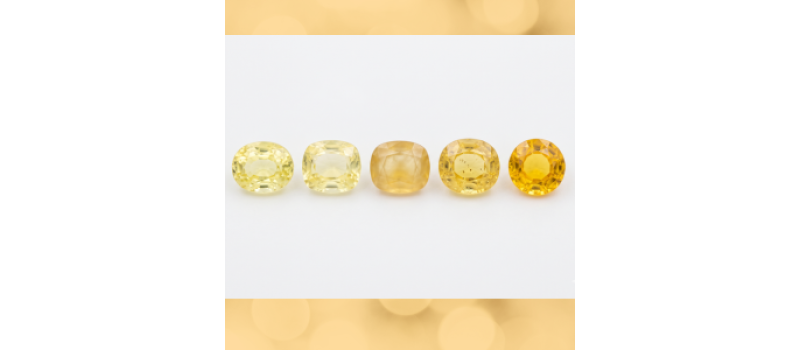
Yellow Sapphire Stone
(Pukhraj): Benefits, Meaning, Price and Buying Guide
Yellow Sapphire Stone holds
a special place in many Indian homes. Called Pukhraj in Hindi, this golden gem
is one of the nine Navratna stones in Vedic astrology. Some families buy it
after consulting an astrologer, while others simply enjoy its warm, sunny colour.
Buying Pukhraj can be
tricky. Prices vary widely, treatments are common, and many look-alike stones
are sold daily.
This guide covers what
Yellow Sapphire is, its meaning in astrology, who usually wears it, how to spot
a real Pukhraj Stone, what affects its price in India, and how to care for it.
What Is Yellow Sapphire
Stone?
Yellow Sapphire is a natural
gemstone from the corundum family, which also includes blue sapphire and ruby.
Corundum is made of aluminium oxide. When it contains small amounts of iron,
the crystal turns yellow, ranging from pale lemon to deep golden shades.
These crystals grow slowly
deep inside the earth under great heat and pressure. Well-known sources include
Sri Lanka, Myanmar, Madagascar, Australia and parts of East Africa.
In India, this stone is
called Pukhraj, a name from the Sanskrit word Pushparaga. It is also known as
Guru Ratna because of its connection to Jupiter.
Yellow Sapphire has a
hardness of 9 on the Mohs scale, just below diamond among popular gems. This
makes it strong enough for rings, pendants, and daily use.
Yellow Sapphire Meaning and
Significance
In astrology, Yellow
Sapphire is linked to Jupiter, also called Guru or Brihaspati. Jupiter is seen
as the teacher among planets and is connected with wisdom, dharma, children,
wealth, and good fortune. The stone shares Jupiter's yellow colour, which is
why it is closely associated with Thursday, the day of Jupiter.
Many people also view it as
a symbol of honesty, optimism, and clear thinking.
The connection between
Pukhraj and Jupiter comes from Jyotish tradition. Science explains the stone's
chemistry, hardness, and colour, but there is no scientific proof that a
gemstone can change planetary influence or personal destiny.
Yellow Sapphire Benefits
The benefits of Yellow
Sapphire listed below are based on traditional astrological beliefs. They are
not scientifically proven, and no stone can guarantee wealth, marriage, or
success.
Wisdom and Knowledge
Jupiter is known as the
planet of learning, so this stone is often recommended for students, teachers,
and anyone seeking better focus and judgment. Some parents pick it for children
preparing for exams.
Career and Prosperity
Astrologers often connect a
strong Jupiter with steady progress in work, business, and finances. Many
people wear Pukhraj hoping for stability and new chances.
Marriage and Relationships
Traditionally, Jupiter is
linked to marriage and family life. Families may suggest the stone if marriage
is delayed or if there is less harmony at home. Astrologers also see Jupiter as
the indicator of a woman's husband in her chart.
Confidence and
Decision-Making
People who wear the stone
often say they feel calmer and more confident in their decisions. This may
partly come from the ritual's sense of meaning.
Spiritual Growth
As the Guru, Jupiter stands
for faith and inner guidance. So, Pukhraj Stone benefits are often described in
spiritual terms like devotion, patience, and a sense of purpose.
Who Should Wear Yellow
Sapphire?
Traditional Vedic astrology
does not suggest Yellow Sapphire for everyone. The choice depends on Jupiter's
position in your birth chart, or kundli.
In Vedic astrology, the
right gemstone depends on your Lagna (ascendant sign). Pukhraj (Yellow
Sapphire) is linked to Jupiter (Guru), so astrologers first check which houses
Jupiter rules in your chart. Here is a simple guide for each Lagna. These are
traditional beliefs, not scientific facts or guaranteed results.
Aries Lagna (Mesh): Jupiter
rules the 9th house (luck, dharma) and the 12th house (spirituality, foreign
connections). Pukhraj is traditionally seen as helpful for fortune, higher
education, spiritual growth and foreign travel.
Taurus Lagna (Vrishabha):
Jupiter rules the 8th house (sudden events, obstacles) and the 11th house
(gains, friends). It is not generally recommended because of the 8th house.
Some astrologers consider it for gains and networking if Jupiter is well placed,
but only after a careful chart study.
Gemini Lagna (Mithun):
Jupiter rules the 7th house (spouse, partnerships) and the 10th house (career,
fame). It is usually avoided unless Jupiter is strong and the running dasha
supports it. In rare cases, it may be suggested for marriage or profession.
Cancer Lagna (Karka):
Jupiter rules the 6th house (service, health) and the 9th house (luck, father,
dharma). Pukhraj is considered very favourable here, mainly for luck, studies,
guidance from mentors and spiritual growth.
Leo Lagna (Simha): Jupiter
rules the 5th house (children, education) and the 8th house (sudden change). It
is considered favourable, especially for education, creativity, children and
spiritual growth. Some astrologers also feel it helps with 8th-house-related
obstacles.
Virgo Lagna (Kanya): Jupiter
rules the 4th house (home, mother) and the 7th house (spouse, partnerships). It
is generally not suggested, as Jupiter is not a functional benefic for this
Lagna. If Jupiter is strong in the 4th or 7th house, you may consider it for
relationships or property, but only on an expert's advice.
Libra Lagna (Tula): Jupiter
rules the 3rd house (effort, siblings) and the 6th house (debts, disease).
These houses are challenging, so Pukhraj is usually not suitable. Wear it only
in rare, specific cases after astrological advice.
Scorpio Lagna (Vrishchik):
Jupiter rules the 2nd house (wealth, family) and the 5th house (children,
intelligence). It is considered very favourable, traditionally linked with
family happiness, wealth, education and creativity.
Sagittarius Lagna (Dhanu):
Jupiter rules the 1st house (self, health) and the 4th house (home, mother). It
is considered excellent for overall well-being, confidence, property and
contentment.
Capricorn Lagna (Makar):
Jupiter rules the 3rd house (effort, courage) and the 12th house (losses,
spirituality). Results are seen as mixed, so it is usually not recommended.
Wear it only if Jupiter is strong and the dasha is supportive, mainly for spiritual
growth or foreign travel.
Aquarius Lagna (Kumbh):
Jupiter rules the 2nd house (family, wealth) and the 11th house (gains,
friends). It is not generally suitable, but it may be considered for financial
growth if Jupiter is well placed, after a detailed chart study.
Pisces Lagna (Meen): Jupiter
rules the 1st house (self, mind) and the 10th house (career, reputation). It is
considered highly favourable, traditionally linked with health, career and
reputation.
These are broad guidelines
only. Your personal horoscope and the dasha you are running matter a lot, so
please consult a qualified astrologer before wearing Pukhraj.
Yellow Sapphire Treatments:
Advantages and Disadvantages
Not every Yellow Sapphire Stone (Pukhraj) is sold
in its original natural condition. Some stones undergo treatments to improve
their colour, clarity and overall appearance. These treatments can make
gemstones more attractive and affordable, but they may also affect their value
and durability.
1. Heat Treatment
Heat treatment involves heating Yellow Sapphire at
controlled temperatures to improve its colour and sometimes its clarity. It is
one of the most widely accepted gemstone treatments.
Advantages: Heating can make pale stones brighter and more
attractive. The colour change is generally permanent, and treated stones are
often more affordable than comparable untreated sapphires.
Disadvantages: Heat-treated sapphires usually have a lower market
value than similar untreated stones. Although the lower purchase price benefits
buyers, their resale value may also be lower.
2. Beryllium Diffusion Treatment
Beryllium diffusion uses high temperatures and
beryllium to change or enhance a sapphire's colour. It can produce attractive
yellow, golden and orange shades.
Advantages: This treatment can transform less attractive
stones into bright, colourful gemstones at relatively affordable prices. The
resulting colour is generally stable during normal wear.
Disadvantages: Beryllium-diffused sapphires are generally less
valuable than comparable untreated stones. The treatment can also be difficult
to identify without specialised laboratory testing.
3. Surface Diffusion Treatment
Surface diffusion uses high temperatures to
introduce colouring elements into a sapphire. Depending on the process, the
resulting colour may remain near the surface or penetrate much deeper into the
stone.
Advantages: It can improve the appearance of pale gemstones
and make them more affordable for jewellery buyers.
Disadvantages: When the colour is concentrated near the surface,
deep polishing or recutting may remove some of it. Diffusion-treated stones
also generally have a lower market value than comparable untreated sapphires.
4. Fracture Filling or Glass
Filling
Fracture filling involves filling cracks with glass
or another material to make them less visible and improve the stone's
transparency.
Advantages: It improves the appearance of gemstones with
visible fractures and makes some lower-quality stones suitable for jewellery at
lower prices.
Disadvantages: Fillings can be damaged by heat, chemicals or
jewellery repairs. These stones require careful handling and cleaning, and
their resale value is generally lower.
5. Irradiation Treatment
Irradiation is a less common treatment that uses
controlled radiation to change or enhance a sapphire's colour, sometimes
producing yellow or orange shades.
Advantages: It can improve the appearance of pale gemstones
and create more attractive colours.
Disadvantages: Some irradiation-induced colours may fade when
exposed to light. Buyers should check that the laboratory report states the
treatment and ask the seller about colour stability.
Which Yellow Sapphire Is Best?
Untreated natural Yellow Sapphire is often
preferred by buyers who value rarity and an unaltered gemstone. Natural
heat-treated sapphire can be a more affordable option for everyday jewellery.
Many people buy Pukhraj for astrological purposes
and prefer untreated stones, although no scientific evidence shows that
gemstone treatments affect astrological results.
Before buying, always ask for an independent
gemological laboratory report and check its treatment findings. A treated Yellow Sapphire is
not necessarily fake. Natural sapphires can undergo treatments and remain
natural gemstones. The important thing is that the seller clearly explains any
known treatments and charges a fair price for the stone's actual quality.
How to Wear Yellow Sapphire
Stone
Traditional advice on
wearing Pukhraj is quite consistent.
Finger:
People usually wear it on the index finger of the right hand, or their working
hand, which is linked to Jupiter.
Metal:
Gold is the most common choice, but some use silver or panchdhatu. Many prefer
an open-back setting so the stone touches the skin.
Day:
Thursday morning during the waxing moon (Shukla Paksha) is seen as the best
time to wear it for the first time.
Before wearing it, many
families dip the ring in raw milk or Gangajal, offer yellow flowers or
turmeric, and chant the Guru beej mantra, "Om Graam Greem Graum Sah Gurave
Namah", 108 times.
Remember, these are cultural
and astrological practices, not scientifically established requirements. If you
wear it only for its beauty, any setting that suits your taste is fine.
How to Identify an Original
Yellow Sapphire
A real Pukhraj Stone is
natural corundum mined from the earth. Synthetic yellow sapphire has the same
chemistry but is lab-made and costs much less. Some sellers also try to sell
yellow topaz, citrine, or glass as Pukhraj.
Natural sapphires often have
tiny inclusions, colour zoning, or fine needles visible under a 10x loupe. Good
transparency matters, since cloudy or milky stones grade lower. If a stone
looks flawless but is very cheap, be cautious, though clarity alone does not
prove authenticity.
Treatments are also common.
Heat treatment improves colour and clarity and is widely accepted if disclosed.
Beryllium diffusion can make pale stones look strongly yellow but can lower
their value significantly.
Home tests with water, milk,
or sunlight cannot reliably prove if a stone is real. The only reliable proof
is a report from an independent gemological lab that confirms natural corundum
and lists any treatments found.
Yellow Sapphire Price in
India
Yellow Sapphire prices in
India are given per carat or per ratti (one ratti is about 0.91 carat). Colour
matters most: even bright golden stones cost more than pale or brownish ones.
Clarity, cut, size, origin, certification, and treatment also matter. Sri
Lankan stones usually cost more, unheated stones cost more, and
diffusion-treated stones cost less. Two stones of the same weight can have very
different prices.
Prices change often, so
always check current rates and focus on quality and certification, not just
price.
How to Choose the Best
Yellow Sapphire
Begin by checking the colour.
Look for an even, bright yellow without brown or green shades. Then check
clarity; it should look clean. A well-cut stone will sparkle across its
surface.
Insist on an independent lab
report and read the treatment line carefully. A reputable seller always
discloses heating or diffusion openly.
Buy from a trusted source and
avoid street vendors or unverified online sellers for high-value stones.
Compare a few certified stones and never pay a natural price for a treated gem.
How to Clean and Care for
Yellow Sapphire
You only need warm water,
mild soap, and a soft toothbrush to clean it. Rinse well and dry with a
lint-free cloth. Store Pukhraj separately in a soft pouch, as it can scratch
softer gems. Ultrasonic and steam cleaners are usually safe for untreated and heated
stones, but glass-filled stones should only be wiped with a damp cloth. Have
the prongs checked every year.
Frequently Asked Questions
What is Yellow Sapphire
called in Hindi?
It is called Pukhraj in
Hindi. In Sanskrit, it is known as Pushparaga, and many people call it Guru
Ratna.
Which planet is associated
with Yellow Sapphire?
In Vedic astrology, Yellow
Sapphire is linked with Jupiter, known in Hindi as Guru or Brihaspati.
Can you wear Yellow Sapphire
every day?
Yes. With a hardness of 9,
it handles daily wear well. Just avoid hard knocks and harsh chemicals.
How can I check whether
Pukhraj is original?
Ask for a report from an
independent gemological laboratory. Home tests and visual checks cannot
reliably confirm authenticity.
Is natural Yellow Sapphire
expensive?
It can be. Prices range from
a few thousand rupees to over a lakh per carat, depending on quality and
treatment.
Conclusion
Yellow Sapphire offers
lasting beauty, real strength, and deep cultural meaning. Whether you wear it
for faith or just for its warm golden glow, buy carefully. Pick a certified
Natural Yellow Sapphire from a trusted seller, know about any treatments, and
pay a fair price for true quality.